Hard work. Artificial intelligence. Drama lessons. Not the end to that combo you’d expect from a tech founder.
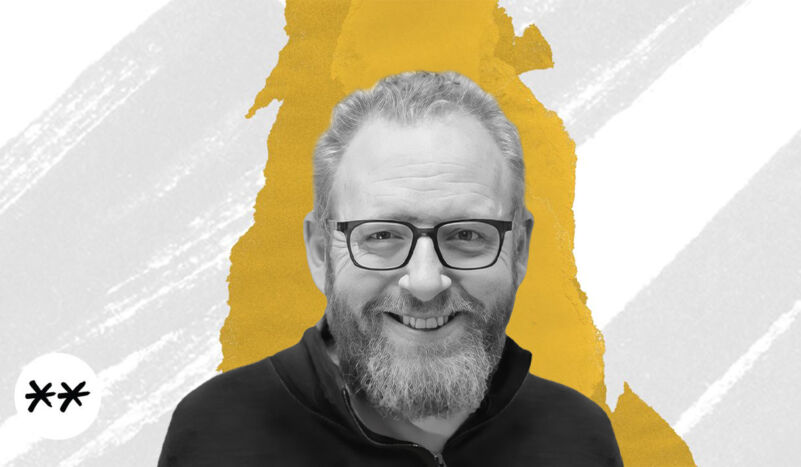
But then Kit Cox isn’t your typical tech founder. As founder and CTO of Enate, he’s spent more than a decade orchestrating people and automation so B2B service businesses can stop faffing about and actually deliver.
This week, I sat down with Kit to talk about his journey from manufacturing engineer to software entrepreneur, and the very unsexy reality behind “overnight success”. We got into why culture is the only thing that really scales, how to use AI properly instead of bolting it on as a gimmick, and why being open and honest with customers is the only long-term strategy that works.
We also wandered into some fun territory: why drama students often end up earning the most, why lawyers and IT departments should be worried, and how curiosity outside your own industry keeps you sharp.
If you’re a founder trying to build something that lasts, there’s a lot to nick from Kit.
From engineer to founder: The “overnight success” that took years
Kit jokes that he’s an “overnight success” that took years. That’s about right.
He started life as a manufacturing engineer, then moved into software development. Eventually he founded Enate to help B2B services companies “be amazing” – originally by building bespoke orchestration work for outsourcing providers, then turning that into a product around 2011.
By 2016–17, as AI started to become genuinely useful, Kit realised the original product wasn’t enough. So instead of milking what he’d built, he took the painful decision to pivot and rebuild Enate to support service delivery much more widely, with AI working alongside the human workforce. Not a tweak. A new product and a new life for the business.
Today, Enate is about 100 people split between the UK and India – around 40 in the UK, 60 in India. And India isn’t a cheap dev back-office; it’s a profit centre with sales, marketing, engineering and service delivery across both countries, acting as one team.
Commercially, they’re doing about £6m in annual recurring revenue, growing at around 40% year-on-year, and they got to profitability last year. They also brought in investment from Scottish Equity Partners, giving early investors a clean exit and valuing the business north of £30m.
The big lesson here? That shiny “overnight success” you see on LinkedIn usually hides years of iteration, rework and uncomfortable decisions. Kit was willing to tear down a working product and start again because the future demanded it. Most founders wait until something’s properly broken. By then it’s too late.
Three stages of automation: Where AI actually fits
Most conversations about AI in business are nonsense. A bit of ChatGPT on the website, a basic bot in customer service, and everyone pretends they’ve “done AI”.
Kit has a much clearer framework. He breaks any service into three stages:
- Identify the request – what is the customer actually asking for?
- Gather the data – what information do we need to fulfil it, and where is it?
- Just f**king do it (JFDI) – get the bloody thing done.
Most companies obsess over stage three. They throw automation at the “doing” – the repetitive bits. And yes, Enate started life doing exactly that.
But the real opportunity, especially with modern AI, is in stages one and two.
Humans waste an incredible amount of time deciphering messy emails, vague forms and half-complete tickets, then hunting for the information needed to fulfil them. It’s tedious, it doesn’t scale and it adds no value.
AI, particularly generative AI, is already decent at this front end:
- Interpreting unstructured requests
- Asking clarifying questions
- Pulling data from documents and systems
- Turning vague noise into a clean, structured task.
By the time you reach “just do it”, the work is properly framed and ready for a human (or bot) to execute.
So Kit’s advice is to stop slapping automation only on the tail-end of your process. Look at the whole lifecycle. Use AI to triage and prep work, then automate execution where it makes sense. Customers get faster service. Your team dodges the drudgery.
Culture is inevitable, so design a good one
Ask Kit what a founder should focus on first, and he doesn’t talk about product, tech stack or go-to-market. It’s culture.
He’s worked in organisations with bad cultures and decided that if he was going to build something himself, he might as well create an environment he actually wanted to be in, and that other people could be their best in too.
He’s very clear on a few points:
- Culture will form anyway. The question is whether you design it or just let it happen.
- You only get one clean shot at shaping it – the first ~40 people. After that, the concrete sets.
- Culture shows up under pressure, not in the perks.
Enate’s values: simplicity, openness, self-starter, superhero, team.
Kit spends an hour with every new joiner walking through Enate’s values – simplicity, openness, self-starting, superhero and team. But the magic isn’t the presentation; it’s in the daily practice.
One concrete example: openness. Everyone at Enate gets the full board pack every month. They talk through it together, building financial literacy across the business. It demystifies how companies work and kills the fantasy that CEOs are all minted and businesses all run at 30% net profit.
The other side of openness is hard too: letting people call you out. If someone tells Kit “that’s not very simple”, that’s valid feedback – and anyone can say it publicly without fear. That’s psychological safety in action. That’s culture doing work for you.
If you’re a founder, you get the culture you tolerate. Not the one you tell people you want.
How Kit keeps customers long-term
Enate often becomes what customers describe as their central nervous system – something that’s incredibly hard to live without once it’s fully embedded. That means relationships that last 10–20 years. And you don’t get those by bullshitting people.
If a client catches you in a lie once, everything changes. They may still pay you, but they’ll never fully trust you again.
Kit’s seen programmes implode because someone promised the product could do something it couldn’t, or because they glossed over the fact that half the work is organisational change, not technology.
So the Enate stance is simple: Be clear on what the product can and can’t do. Be honest about the change required. Have the hard conversations early, not halfway through a transformation.
Short-term discomfort prevents long-term disaster. That’s how you get customers who stay for 20 years.
Radical customer success and focused growth
Enate grows at around 40% year-on-year, and about half of that comes from existing customers. But not from upsell campaigns – from success. When customers succeed with Enate, they roll it out further.
Kit calls this radical customer success. It’s not about throwing new products and services at clients. It’s about walking with them, helping them make the change they actually set out to achieve.
To make that predictable, Enate built a solutioning methodology:
- A clear north star for the programme
- Guardrails to avoid scope creep
- Shared language that prevents the project being hijacked by the loudest voice in the room
That’s why Vistra – a 7,500-person organisation – could describe Enate as the most successful programme they’ve run in 20 years, while other tech rollouts caused “horrific grief”.
On the new business side, the focus is equally sharp. Enate targets just 100 named accounts. That’s it.
And timing matters. Some deals take years. One major customer currently in contracting first entered the funnel five years ago. They weren’t ready then. They are now.
If you’re a founder: narrow your focus, and play the long game.
Not just book-smart: Why drama kids end up running the room
Kit believes it takes “a thousand different types of clever” to build a great company. Schools only test two of them.
Drama students, in particular, often end up as your highest earners. Why? Because theatre teaches storytelling, presence, improvisation and how to read the room
The challenge to founders: broaden your definition of talent.
The coding wizard is great. The person who can take a sceptical room and bring them with you? Worth their weight in gold.
AI is coming for the lawyers (and maybe your IT department)
This is where Kit gets properly spicy.
Two predictions:
- Lawyers, at least in their current form, are in trouble.
- In many service businesses, traditional IT departments could soon disappear.
On law, regulators in the UK can now license AI-only law firms, and insurers will cover them. Their scope is narrow today, but trends are obvious: for 30 years, the legal industry has been under pressure to reduce costs – partners to juniors, juniors to paralegals, paralegals to offshore, and now offshore to AI. This is just the next step.
On IT, Kit is very clear he’s talking primarily about service providers, not every business on earth.
Historically, IT departments existed because everything was bespoke. You built your own applications and ran your own servers. But for many businesses now, including Enate, almost everything is bought, not built.
Now Kit’s not saying “everyone needs to sack their IT department”. It’s that the classic IT department won’t make sense in many mid-sized service businesses.
The line between tech and operations disappears.
Hiring: Look past the CV for values and curiosity
“We hire for attitude.”
Everyone says it. Almost no one does it.
Kit actually means it.
By the time someone gets to him for interview, he wants to understand their values and curiosity more than their experience.
He uses two questions that cut straight through the bullshit:
What’s something new you learned recently?
Apart from your kids, what are you most proud of?
You’d be amazed how many candidates can’t answer the first one.
Every hire raises or lowers the cultural bar. There’s no neutral.
Staying curious: Why your best ideas won’t come from your own industry
Kit’s influences are wonderfully eclectic:
13 Minutes to the Moon – especially “The Kids Are In Charge”, which he calls a masterclass in high-stakes operations
Mindscape – Sean Carroll’s long-form science, AI and philosophy conversations
Kris Harbour Natural Building – off-grid craftsmanship as a philosophy and way of life
The common thread? Curiosity.
Most founders stay too close to their own industry. That’s a mistake. The best ideas often come from strange places.
AI good, humans better
Talking to Kit Cox is a useful reminder that even in a high-tech business, the stuff that really moves the needle is deeply human.
Kit’s story makes a mockery of the “overnight success” myth. There’s no magic moment. Just years of doing the right things, rebuilding when necessary, and staying curious enough to see what’s coming next.
If you’re a founder, that’s the only way to do it. There are no shortcuts to becoming an overnight success.