

What this post covers
Lee Smith grew a £200k IT business to £2m through three strategic acquisitions, spending nothing on marketing. He then built two sector groups now generating £10m in combined profit. This post breaks down his buy and build framework: why he almost never buys 100% of a business, how multiple arbitrage works, how non-PE founders fund deals, and why he believes profitable SMEs will become Britain’s most valuable asset class.
The short answer
A buy and build strategy grows a business through a series of acquisitions rather than organic growth. A founder acquires a platform company, then makes bolt-on acquisitions to build a more valuable group. The financial logic is multiple arbitrage: businesses bought at 4-5x earnings individually are worth 7-10x combined in a professionally managed group. That’s the mechanism.
Buy and build strategy: definition
An inorganic growth model in which an acquirer purchases a platform business and makes multiple bolt-on acquisitions to build a larger, more profitable group, exiting at a significantly higher earnings multiple than each company would achieve independently.
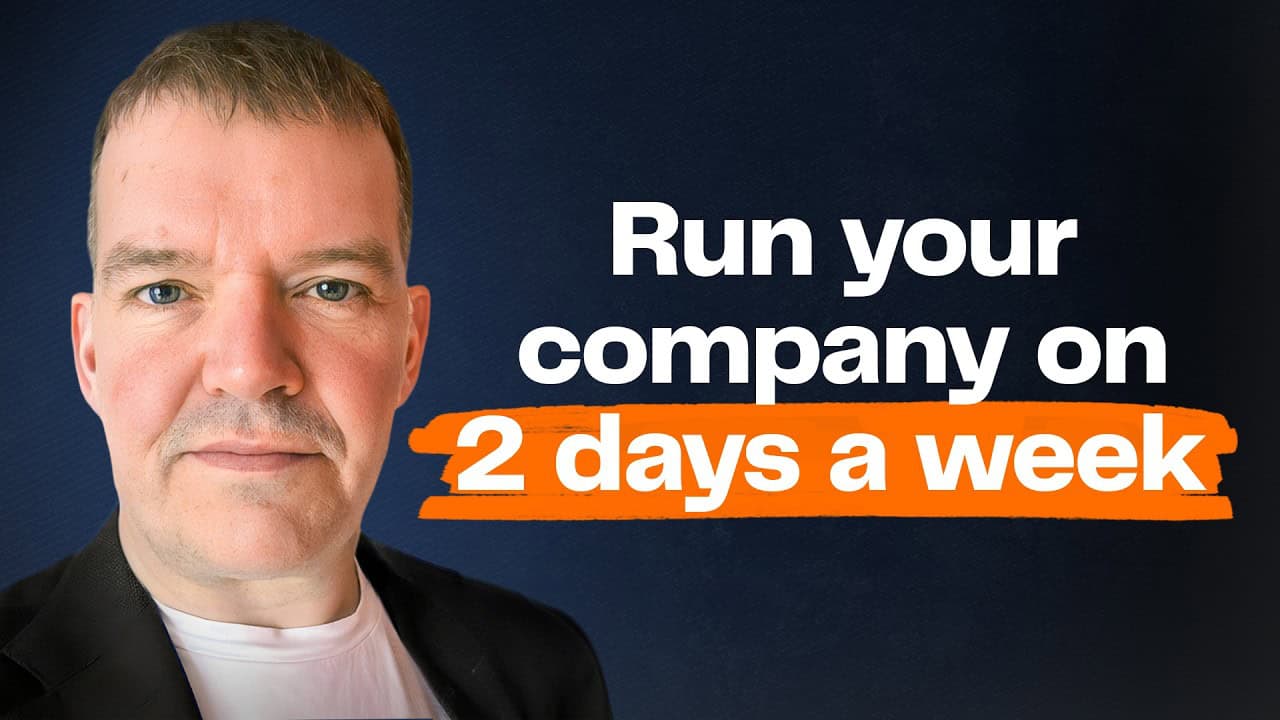
Lee Smith started with a £200k IT company. No marketing budget. No private equity backing. Three strategic acquisitions later: £2m in revenue. He kept going. Two sector groups: IT services and HVAC, now generating £10m in combined profit. He grew up on a council estate in South London with no generational wealth and no MBA. Just a framework that the average scale-up founder has never seriously considered.
I spoke to Lee on the Scale to Win podcast (E363). What he described challenges almost every assumption you’re likely to have about growth. This article breaks down his method, his deal structures, and the mechanics that make it work.
What is a buy and build strategy?
A buy and build strategy is a form of inorganic growth. Rather than growing by selling more or hiring more, you grow by acquiring businesses that already have revenue, profit, and people.
The model works in two phases. First, you identify and acquire a platform business: something with existing cash flow, a competent management team, and the infrastructure to absorb further acquisitions. Then you make a series of bolt-on acquisitions, integrating them into the platform to build a larger, more valuable group.
This is distinct from a pure roll-up, which consolidates identical businesses for scale alone. Buy and build seeks complementary businesses that strengthen the platform, adding new services, new geographies, or new customer relationships.
The strategic prize is multiple arbitrage. A small, owner-managed business might sell for 4-5x earnings. Combine several into a professionally managed group with a growth trajectory, and the whole becomes worth 7-10x earnings. The value is created in the combination, not just the individual parts.
Why do so many founder-CEOs overlook acquisition as a growth path?
The default scale-up playbook is organic growth: more marketing spend, more salespeople, another product line. It’s familiar, it feels controllable, and it’s how most founders have always grown. Acquisition feels complicated by comparison.
The assumption is that you need deep sector expertise, millions in the bank, and a team of lawyers to execute a deal. Lee had none of those when he made his first acquisition. What he had was a willingness to structure deals creatively and an honest assessment of where he added value.
The numbers make the case. He started with a web design and IT company turning over roughly £200k. He discovered M&A in 2014 and, in his words, “flipped the switch.” Three mergers later, the business was at £2m in revenue, grown entirely without a marketing budget. He went on to build a second sector group in HVAC and renewable energy. Today his two groups generate £10m in combined profit.
The mental barrier isn’t financial. It’s the assumption that this is a PE strategy. It isn’t.
Why should you never buy 100% of a business?
Lee’s most counterintuitive rule: across his acquisitions, he almost never buys 100% of a company. He keeps original founders or key directors holding 10-20% equity. “Buying 100% is almost always the worst deal structure.”
This isn’t generosity. It’s commercial logic.
When a founder sells 100% and walks away, three things break. Client relationships fracture because they were built on personal trust. Key staff leave because their loyalty was to the founder, not the brand. And institutional knowledge walks out the door with them.
Keep 10-20% in the original owner’s hands and you create genuine alignment. They’re still invested, still care, and motivated to grow their remaining stake as the group scales. That’s a very different psychological contract to the clean exit where someone takes their money and disappears.
Think about it from the seller’s perspective. A full buyout leaves you with cash and zero incentive after day one. A retained stake in a business about to receive serious investment and strategic support keeps you in the story. Lee’s model keeps the people who built the business. Less dramatic, far more sustainable.
Do you need sector expertise to acquire a business?
You don’t. Lee owns a large HVAC business and admits he “barely understands what they do.” He runs it successfully without technical knowledge.
What he separates are two roles that most founder-CEOs conflate: the strategist and the operator. If you’ve spent time with the Entrepreneurial Operating System, you’ll recognise this distinction. The visionary sets direction, does deals, and thinks about where the business is going. The integrator runs the day-to-day, manages the team, and executes the plan.
Lee is honest about which one he is. “I’m a great dealmaker and strategist. Not a great day-to-day operator.” So he doesn’t pretend otherwise. He acquires the business, sets strategic direction, and installs a competent MD or CEO in the integrator seat.
You need to understand three things: financial performance, people dynamics, and market positioning. Everything else belongs with the operator.
“I’ve coached more than 200 founder-CEOs through the scaling journey. The ones who build the most valuable businesses rarely win by outspending competitors on marketing or sales. They understand the mathematics of inorganic growth. Buy and build isn’t a PE strategy that requires a Goldman Sachs banker on speed dial. It’s a founder strategy, and the founders who execute it earliest build the biggest businesses.”
Dominic Monkhouse, founder, Monkhouse & Company
How does the multiple arbitrage maths actually work?
Here’s the financial logic in plain terms.
Say you buy two IT businesses, each generating £500k profit a year. Independently, each might sell at 4-5x earnings, roughly £2m-£2.5m apiece. You spend £4m to £5m acquiring both.
Combined, you have a group generating £1m profit. But a professionally managed group with scale, a growth trajectory, and shared infrastructure is a fundamentally different asset to two standalone owner-managed businesses. At group scale, trade buyers and PE acquirers will pay 7-10x earnings. That puts the combined value at £7m-£10m.
You’ve acquired businesses for £4m-£5m that are worth £7m-£10m in combination. The multiple uplift is the mechanism. This works before you’ve grown the underlying revenues by a single pound. Add organic growth, cross-selling, and the operational improvements that come with professional management, and the numbers become more compelling still.
Lee achieved this across two sector groups. The maths don’t change whether you’re rolling up IT services businesses in Surrey or HVAC contractors across the Midlands.
How did Lee build a profitable HVAC group without technical expertise?
Lee bought an HVAC business immediately before COVID hit. He chose the sector deliberately. Construction and HVAC are resistant to AI disruption and automation. Someone still has to physically install the systems.
He didn’t buy 100%. He kept the founder involved and gave equity stakes to two key directors running operations. The people who knew the clients, the supply chain, and the staff were still fully committed.
He introduced monthly board meetings, which sounds basic but is surprisingly rare in SMEs. He set clear KPIs for the leadership team and gave them the autonomy to hit those numbers.
His involvement started at one to two days per week. As the business matured, he installed a sector-experienced CEO, someone with a proven track record of scaling comparable businesses significantly, and stepped back entirely. His time commitment dropped to almost nothing. That’s the model working as designed: acquire, govern, install the right leader, step back.
I scaled two companies to £30m. Every week, I'll show you how.


What does a practical IT services roll-up look like?
In 2019, Lee acquired two almost identical IT companies, each generating roughly £1m in profit. Both founders were doing everything: sales, marketing, HR, finance, client management. Neither could take two days off without the business wobbling. Profitable but trapped. Sound familiar?
Lee merged the businesses and installed tier-two management. Instead of two founders doing everything, he created proper functional roles: a sales lead, an operations lead, an HR function. Both founders could finally step back from the daily grind.
The maths are straightforward. Two businesses each generating £1m profit, bought independently at 4-5x earnings, cost roughly £4m-£5m to acquire. Combined, professionally managed, with a growth trajectory, the group targets 7-10x earnings: a combined value of £14m-£20m. Neither business reaches that multiple independently. Together, they do. That’s the value creation in a buy and build strategy.
How do you fund a buy and build strategy without private equity backing?
The question most founders ask first: where does the money come from?
The assumption is you need millions in the bank or a PE backer. Lee didn’t have either when he started. The toolkit for founder-funded acquisitions is wider than people realise.
Vendor finance: Many SME owners want a fair price and some legacy more than a lump sum on day one. Seller-financed deals, where the purchase price is paid from the business’s own cash flow over three to five years, are far more common in SME M&A than founders assume.
Deferred consideration: Pay a portion upfront, the rest over time against agreed milestones. Reduces the upfront capital requirement and creates alignment between buyer and seller post-completion.
Seller equity retention: Lee’s preferred mechanism. Keep the founder in at 10-20% equity. This significantly reduces the upfront acquisition cost because the seller retains a share of the future upside rather than being bought out entirely.
Leveraged debt: Once you have an established platform generating strong cash flow, lenders will fund further acquisitions against the combined earnings base.
The founders who say they can’t afford buy and build have usually only ever priced a clean 100% cash acquisition. That’s the most expensive version. Structure it correctly and the business funds itself.
What are the biggest traps in SME acquisitions?
Not every deal works. Lee shared a cautionary tale about IT companies in the Middle East that looked hugely profitable on paper. The reality: clients paying six months in arrears, owners pulling large dividends, restricted working capital. The businesses were effectively broke despite strong revenues.
Revenue is vanity. Profit is sanity. Cash flow is reality.
Before any acquisition, verify three things beyond the headline numbers. Actual cash collection cycles: not what the invoices say, but when money hits the bank. Owner drawings and dividend history: are they reinvesting or extracting? And working capital requirements: can the business fund its own operations without constant cash injections?
Cultural fit matters just as much. A business with great financials and the wrong culture is an expensive distraction. If the team doesn’t share the platform’s values and operating standards, integration becomes a management war that costs more than the deal was ever worth. Lee’s rule: if cultural alignment isn’t there from the first conversation, walk away.
How do EMI schemes help you retain key people after an acquisition?
Lee uses Enterprise Management Incentive schemes to lock in talent post-acquisition. He gives key management EMI options or minority shares. “Five percent of a massive exit is life-changing for an employee.”
In a competitive hiring market, salary alone won’t keep your best people. Every employer can match a number. What they can’t easily match is a meaningful equity stake in a growing business with a clear exit path.
The practical framework is straightforward. Identify your top five to ten people: the ones who would genuinely damage the business if they left. Offer them EMI options representing 1-5% of equity each, with vesting periods aligned to your exit timeline. Make sure they understand the potential value.
A smaller percentage of a much bigger pie beats 100% of a smaller one. Every time.
Why will profitable SMEs become Britain’s most valuable asset class?
Lee’s prediction: the businesses that survive the current economic period and remain profitable will become extraordinarily valuable. “Profitable SMEs will be the most valuable asset class in Britain by the end of this decade.”
The logic tracks. Rising costs, tight credit, and margin pressure are squeezing weaker businesses out of the market. If you’re a founder CEO sitting on a profitable, well-run business, you’re in an increasingly rare position. And if you have the framework and appetite to acquire, you’ll be buying from a growing pool of motivated sellers at realistic prices.
The economic pressures making life harder for SME owners are simultaneously creating the best acquisition conditions in a generation. Sellers are realistic on price. Banks are cautious, which favours acquirers who already have cash flow. Businesses that survive this period emerge with less competition and stronger market positions.
The window won’t stay open forever. The founders who act now, while multiples are reasonable and sellers are motivated, will build the most valuable portfolios.
Frequently asked questions
What is a buy and build strategy?
A buy and build strategy grows a business through a series of acquisitions rather than organic growth. A founder or investor acquires a platform company with existing cash flow and infrastructure, then makes bolt-on acquisitions to build a larger group. The financial logic is multiple arbitrage: businesses bought at 4-5x earnings individually are worth 7-10x when combined into a professionally managed group.
How does multiple arbitrage work in a buy and build strategy?
Multiple arbitrage works because small, owner-managed businesses trade at lower earnings multiples (4-5x) than larger, professionally managed groups (7-10x). By acquiring several small businesses and combining them, the acquirer creates a group that commands a significantly higher multiple at exit. The value is created in the combination, not in the individual acquisitions.
How do you fund a buy and build strategy without private equity?
Most SME acquisitions are funded through a combination of vendor finance (the seller accepts payment over time from the business’s cash flow), deferred consideration (staged payments based on milestones), and retained seller equity (keeping the seller at 10-20% reduces upfront cost). A clean 100% cash acquisition is the most expensive structure and is rarely necessary.
Do you need sector expertise to execute a buy and build strategy?
No. Lee Smith built and runs a large HVAC business without understanding the engineering work his teams do. You need to understand financial performance, people dynamics, and market positioning. The operational detail belongs with a competent managing director in the integrator role.
What are the biggest risks in a buy and build strategy?
The three most common risks are: cash flow surprises (revenue looks strong on paper but clients pay six months in arrears); cultural misalignment (a business with great financials but incompatible values becomes an expensive distraction post-acquisition); and over-paying for 100% ownership when a retained equity structure would have been cheaper and more effective.
Dominic has coached more than 200 founder-CEOs through the scaling and acquisition journey. Twelve have gone on to have substantial exits.
Three ways I can help
- Book a call. If you’re a founder-CEO who has hit the organic growth ceiling and wants to explore whether acquisition could be the right next move, book a call with Dominic. Thirty minutes. No pitch. We’ll work out quickly whether what he does is relevant to where you are.
- Grab the book. Mind Your F**king Business is the practical guide to scaling a founder-led business without the founder becoming the bottleneck. The frameworks in this article sit squarely in what Dominic covers.
- Subscribe to the newsletter. Free tool every week. If this article was useful, the newsletter will be too.
Your move. The strategy isn’t new, and it’s not only available to PE-backed acquirers. The question is whether you investigate it before your competitors do.
About the author
Dominic Monkhouse scaled Rackspace UK and Peer 1 Hosting as Managing Director, taking both to a £30m annual run rate. He is the founder of Monkhouse & Company.